CHAPTER XIII: A History of Jefferson County, Texas
Ethnic Groups and the Antebellum Social Complex
By W. T. Block
After the Texas Revolution, Jefferson County was the gateway for a great influx of land hunters seeking to improve their fortunes in the newborn republic. Many of them stopped only to rest and then continued their westward trek. Others who remained in the county during its infancy succumbed to the “westward fever” during the 1840’s. Between 1838 and 1842, some applicants who obtained certificates for public land were forced to locate their claims at distant points in the Texas Republic, and left to take up residence on their land grants.
For the many hundreds who remained in antebellum Jefferson County, horizontal mobility did not necessarily cease. Opportunity, usually in the form of fertile lands nearby, beckoned frequently, causing many inhabitants to relocate periodically within the county. This was a common phenomenon among farmers such as J. Biddle Langham, who lived at four locations within the county and two places in neighboring counties during his thirty-year career as a cotton grower, but was less common among ranchers, merchants, and craftsmen.1
The two earliest census documents verify that the first Southeast Texans were overwhelmingly of Anglo-Saxon origins in the American Lower South. Of the 331 persons enumerated in the Atascosita Census of 1826, only five were European-born, and no French Acadian surnames were listed. A majority of them had resided in Louisiana before arriving in Texas.2 In 1839, McGuire Chaison, Michael and Baptiste Peveto, and Lefroy Guidry were the only French Acadians listed as taxpayers in Jefferson County, and Christian Hillebrandt was the only one known to have migrated from Europe. In that year, there were 207 slaves on the county’s tax rolls.3
In the state census of 1847, the Jefferson County enumeration included 234 electors and a total population of 1,299 persons. The count included 574 white males and 494 white females, a disproportionate sex ratio which would widen throughout the antebellum period. The fifty-three persons classified as free mulattoes, all of whom lived in present-day Orange County, were the largest enumeration in that category of any Texas county. Bespeaking the lack of a plantation economy, only 178 slaves were recorded in the census.4
The best documents for an antebellum social analysis of the county’s population are the six schedules of the Seventh and Eighth Censuses of the United States for 1850 and 1860. However, their value as historical sources is somewhat limited due to misspellings of surnames, discrepancies of age, and occasionally, the scant and incomplete information provided.5 Any comparison of the two documents must be done with two factors given due consideration. Jefferson County’s land area, population, and assets were halved when Orange County and about one-half of Hardin County were separated, respectively, in 1852 and 1858. In addition, some categories of the county’s 1860 census were swelled by the presence of about 150-200 itinerant railroad construction workers, who were mostly European immigrants and Northerners.
The following information has been compiled by an actual count of the manuscript returns, Schedules I and II, of Jefferson County for 18506 and 1860:
| Number of | Census of 1850 | % | Census of 1860 | % |
|---|---|---|---|---|
| White males | 827 | 52.7 | 1,006 | 58.4 |
| White females | 681 | 43.6 | 717 | 41.6 |
| Free colored males | 33 | 1.9 | 1 | 0 |
| Free colored females | 29 | 1.8 | 0 | 0 |
| Total free males | 860 | 54.8 | 1,007 | 58.4 |
| Total free females | 710 | 45.2 | 717 | 41.6 |
| Total free population | 1,570 | 100.00 | 1,724 | 100.0 |
| Number of | Census of 1850 | Census of 1860 |
|---|---|---|
| Slave Males | (2 pages unreadable) | 158 |
| Slave Females | (2 pages unreadable) | 151 |
| Slave Population | 437 | 309 |
| Total Population | 2,007 | 2,033 |
The following list indicates the birthplace of the county’s free inhabitants of 1850 and 1860. Oftentimes, the birthplaces of children divulge that families maintained a period of residence in Louisiana before moving on to Texas.
| Population Origins of Free Inhabitants | Census of 1850 | % | Census of 1860 | % |
|---|---|---|---|---|
| Native-born Texan | 558 | 35.5 | 560 | 32.5 |
| Born in Louisiana | 540 | 34.5 | 392 | 22.7 |
| Born elsewhere in Lower South | 204 | 12.9 | 177 | 10.2 |
| Born elsewhere in Upper South | 91 | 5.8 | 114 | 6.6 |
| Born in the Northern States | 114 | 7.2 | 246 | 14.3 |
| Foreign-born | 63 | 4.1 | 194 | 11.3 |
| Not listed | 0 | 0 | 41 | 2.4 |
| Total | 1,570 | 100.0 | 1,724 | 100.0 |
Any use of population growth statistics for the decade of the 1850’s must give due consideration to the separation of two counties. The most noticeable changes were the increase of white males, principally attributable to the influx of railroad workers; the loss of the free mulatto population; and the percentage drop, from 70 to 55, in the number of Texas and Louisiana-born residents, who were moving farther west. By contrast, there is a visible shift of origins in the Lower South. The number of residents born in the North doubled, while the number of European immigrants tripled.
A breakdown by various states and foreign countries shows:
| Jefferson County Residents born in | Census of 1850 | Census of 1860 |
|---|---|---|
| Mississippi | 91 | 60 |
| Alabama | 31 | 47 |
| Georgia | 53 | 38 |
| South Carolina | 23 | 29 |
| Tennessee | 36 | 27 |
| Ohio | 12 | 44 |
| New York | 25 | 76 |
| Pennsylvania | 27 | 37 |
| Ireland | 1 | 38 |
| England and Scotland | 16 | 31 |
| German States | 29 | 100 |
| France | 3 | 6 |
| Canada | 4 | 7 |
The preponderance of males over females was a common phenomenon along the American frontier, wrought by the large numbers of young, unmarried men leaving the eastern seaboard states after 1840. Its general effect was to lower the average age of brides on the frontier, and a comparison of the county’s census and marriage records bears this out. Writing about Jefferson County in 1858, Beaumont’s school teacher-correspondent Henry R. Green observed that one need not “come here to hunt up a wife-the race is nearly extinct; but in about three years an abundant crop will be gathered. We have about a dozen young ladies in the county, some of them quite beautiful . . . and . . . there are no widows.”7
In 1850, Dr. Niles F. Smith was the county’s largest landholder, owning real property valued at $14,000.8 Using Schedules I and IV (but excluding Schedule II) of the 1850 census returns, in order to compute the combined value of real estate and livestock, the county’s wealthiest citizens of that year were Aaron Ashworth, $17,571; David Burrell, $14,844; Dr. Smith, $14,000; Christian Hillebrandt, $13,075; William Ashworth, $11,900; and Stephen Jackson, $11,743.9 In addition, four of them owned slaves, whose value can be added to the foregoing figures: Aaron Ashworth, 6; David Burrell, 9; Christian Hillebrandt, 11; and Stephen Jackson, 7 (see footnote).10
The prosperity of the 1850’s is reflected in figures which are available for the close of that decade. In 1859, the estate of Christian Hillebrandt was probated at $85,381.11 The 1860 manuscript returns reveal that Jefferson County’s wealthiest inhabitants were David R. Wingate, worth $108,000; John Stamps, $85,000; George W. and Mary Hawley, $82,500; Sarah Herring, $51,000; William and Julia Sweet Burgett, $50,000; William McFaddin, $43,650; Joseph Hebert, $31,851; Thomas R. Jackson, $30,500; J. Biddle Langham, $25,000; and John Jay French, Sr., $25,000.12
Since census schedules can reflect a margin of error, any list of occupations compiled from census data must be utilized with discretion. Some residents listed two occupations, some listed simply as laborers were probably farm laborers, and others listed simply as carpenters were probably ship carpenters. It is also apparent that, by 1860, work opportunities in new industries and railroad construction had reduced the number of farmers substantially. Schedules I, Population, of the Seventh and Eighth Federal Censuses reveal the following counts and categories of workers:
| Occupation | Census of 1850 | Census of 1860 |
|---|---|---|
| Farmer | 176 | 57 |
| Farm Laborer | 38 | 40 |
| Stockman | 38 | 20 |
| Stock Laborer | 11 | 1 |
| Laborer13 | 59 | 168 |
| Carpenter | 20 | 62 |
| Ship Carpenter | 8 | 6 |
| Merchant | 11 | 21 |
| Physician | 2 | 6 |
| Lawyer | 2 | 6 |
| Shingle-maker | 5 | 5 |
| Saddler | 5 | 0 |
| Blacksmith | 5 | 8 |
| Railroad contractor | 0 | 8 |
| Hotel Keeper or employee | 2 | 6 |
| Civil or railroad engineer | 0 | 25 |
| School teacher | 6 | 9 |
| Music teacher | 0 | 4 |
| Printer or editor14 | 0 | 5 |
In 1850, Jefferson County farmers valued their 1,930 acres of improved lands and 42,582 acres of unimproved lands at $48,191, or an average of $1.08 per acre. Good farm land sold at from $3 to $5 an acre. The census enumerator reported the county’s real estate valuation to be $262,692 and the personal valuation was listed at $328,863.15 In 1855, the county assessor taxed 111,640 acres of land, valued at $70,300, and 216 slaves, worth $102,000.16 In 1856, 111,438 acres assessed at $75,340 and 255 slaves at $120,960 were listed on the county’s tax rolls.17
Due to the loss of taxable acreage to Hardin County in 1858, the tax rolls of 1859 listed only 89,000 acres, assessed at $80,116. The separation also affected the number of slaves on the rolls, 259 being assessed at $155,600 in that year.18 The 1861 tax assessments showed a significant increase in both acreage and slaves, indicating that many of the latter had arrived in Jefferson County to work on the railroads. The 402 slaves were valued at $261,400, and 146,476 acres of land were listed at $300,705.19 In 1862, the acreage dropped to 110,716 worth $220,705,20 but increased again the following year to 142,248 with an assessed valuation of $209,165.21
Jefferson County’s lack of a cotton plantation economy precluded the extensive use of slaves in the production of that commodity. The county’s only significant cotton planter, J. B. Langham, who grew 49 bales in 1859, owned only four slaves, although he probably leased or rented the labor of others.22 M. S. McAlpin, whose thirteen slaves made him Jefferson County’s largest slaveholder in 1850, was neither a significant farmer nor cattleman and apparently leased his slaves to other farmers.23
In 1860, 101 of the county’s 309 slaves were owned by twenty-one residents of Sabine Pass, where no cotton was grown in that year. John Stamps, a railroad contractor at Sabine, owned twenty-six slaves, and David R. Wingate, a sawmiller, owned thirteen. Twenty of the twenty-one slaves at Grigsby’s Bluff, present-day Port Neches, were owned by two ranchers, Lastie and Levi Hillebrandt, and two sawmillers, Samuel Remley and John T. Johnson. Most of the remaining slaves in Jefferson County were owned by the principal cattlemen and merchants. The available evidence suggests that slaves were utilized principally in the production of corn and sweet potatoes, as caretakers of livestock or household servants, and as sawmill and railroad laborers.24
Nothing is known of the treatment, which probably varied with the slaveholder, accorded to slaves in Jefferson County. The average assessment of slaves on the tax rolls increased from $472 in 1855 to $650 in 1861.25 However, a wide range of values was in effect, depending upon a slave’s age, sex, condition of health, possession of faculties, and training. A slave usually represented a considerable investment for most slaveholders. Hence, mistreatment of a slave to the point of injury or impairment of health could have affected the slaveholder’s net worth.
Some of the county’s slaveholders of 1850 were themselves free mulattoes. In that year, Aaron, William, Joshua, and Abner Ashworth owned twelve slaves.26 As early as 1839, three Ashworths owned nine slaves, and there are numerous title transfers of slaves to or from members of the Ashworth family thereafter.27 Frederick Olmsted observed in 1856 that some slaves interpreted it to be a loss of dignity or caste to be owned by another Negro.28
The “free Negroes” of early-day Jefferson County may have been considerably less black than has been previously inferred. Schedule I of the Federal census of 1850 indicates that seventeen of the county’s sixty-two mulattoes were no more than quadroon in racial composition.29 In 1860, Marshal Pattillo classified as white many of the same persons that were enumerated as mulattoes a decade earlier.30 In 1856, Frederick Olmsted wrote that the Ashworth families, with whom he visited, were “now three or four generations removed from black blood.”31 On occasion, it was necessary to “prove” in court, by the opinions of witnesses, that the Ashworths were mulattoes since, apparently, their appearances did not always confirm that fact.32 An early historian who knew them stated that, except for dark complexions, the original Ashworths had the hair texture and features of whites.33
The nucleus of Jefferson County’s free black colony were Hiram Bunch and William, Aaron, Jesse, Abner, and Tapler Ashworth, all of whom arrived in Texas between 1831 and 1834.34 Four Ashworths were members of Captain George W. Hargraves’ Beaumont militia company in 1835,35 and two of them, Abner and William, sent paid substitutes, Elijah Thomas and Gibson Perkins, to fight in the Texas army.36 In 1839, William Ashworth was taxed for four slaves, 520 head of cattle, and 3,641 acres of land in the county. Aaron Ashworth was assessed for four slaves, 150 cattle, and 1,467 acres of land. Abner Ashworth was taxed for 320 acres of land, one slave, and 150 steers, and Jesse and Joshua Ashworth were assessed for 99 acres of land and ninety cattle, respectively. In addition, six free mulattoes paid poll taxes in 1839.37
Jefferson County’s free mulattoes were dealt a severe blow in February, 1840, when the Texas legislature passed an exclusion act forbidding their continued residence in Texas.38 Postmaster George Pattillo immediately petitioned President Mirabeau Lamar in their behalf,39 observing that Jesse Ashworth “maintained a reputation for good character.”40 Ten months later, the Republic’s legislature passed an enabling act, which permitted the Ashworths, and all other free persons of color who resided in Texas on March 2, 1836, to remain.41
While the Ashworths were excluded from public office, they still enjoyed most freedoms. In 1847, Sillastia Gallier, a white man, was arrested for marrying a mulatto, Margaretta Ashworth, but the charge was apparently quashed.42 This was probably the singular action of a zealous lawman, for there is no record in Jefferson County that William Ashworth, Abner Ashworth, Elvina Carter, William Nelson, or Sarah Berwick, all of whom had white spouses, were ever molested.43 Apparently, Henderson Ashworth chose to maintain a common law marriage rather than violate the ban on mixed marriage. In 1847, he paid a $100 fine for living in fornication with his white wife, but as of three years later, they were still living in the same household.44
By 1850, the county’s free mulatto population had grown to sixty-two persons.45 Aaron Ashworth, worth more than $20,000, was the county’s wealthiest citizen, and was followed by William Ashworth in fifth place. The former owned six slaves and 2,570 head of cattle. Abner and William Ashworth owned 975 and 900 head of steers, respectively.46
In 1852, the free mulatto population became Orange County residents after Jefferson County was halved. Their fortunes declined following the racial disturbances of 1856, during which time half of them abandoned Texas permanently.47 In 1860, the Ashworth families still owned twelve slaves. Aaron Ashworth had managed to retain about three-fourths of his 1850 estate, but the 62-year-old William, who was then employed as a laborer, had assets of only $2,800. Neither man was listed as still owning cattle.48
By 1850, a white ethnic movement, the French Acadian migration to Jefferson County, was attaining a noticeable proportion. Their relatively late arrival was not an unusual phenomenon. Apparently, French Acadians did not begin a large westward trek until a shortage of land forced them to abandon their south-central Louisiana habitat. As in Jefferson County, the population of Calcasieu Parish, Louisiana was predominantly of Anglo origin prior to 1860.49
The Minutes of the county’s Board of Land Commissioners reveal that only two Pevetos, McGuire Chaison, and Lefroy Guidry had applied for land grants as of 1840.50 During the 1840’s, they were followed by Ursin and Joshua Guidry, Joseph Hebert, Alexis Blanchette, Emile and Sevan Broussard, John Jirou, Joseph and Francis Gallier, Joseph Chaisson; and Joseph Peveto. Each of them applied his brand to the county’s early cattle history. Being farmers and ranchers, the Acadians scattered to the county’s outmost reaches, but the popular Taylor’s Bayou district attracted the greatest number.51
During the 1850’s, the Acadian trickle became a small torrent. Names such as Antoine Miller, Joseph Trahan, Traville Thibodeaux, Gilbert Lacour, Zelia, Claviel, and Clarville Boudreaux, Carlin Quibodeaux, D. and Joseph East, V. Frugia, Emile Guidry, Deuneville, Leonce, Theophile, and Moise Broussard, Giles Dugat, Jules and M. Bellard, Onazene LeBlanc, Lucien, Tousant, and Joseph Suixnine, M. Premeaux, and S. Richard were added to the county’s roster of residents. Most of them were farmers, farm laborers, and stockmen, who congregated in the county’s southwest regions.52
In 1850, only Ursin Guidry, McGuire Chaison, John Jirou, and Joseph Hebert owned herds ranging in size from 700 to 1,000 head.53 By 1860, the count of the Acadian cattlemen’s herds were as follows: Joseph Hebert, 2,974 head; Sevan Broussard, 1,200 head; Alexis Blanchette, Sr., 684 head; Eliza Chaison, 1,000 head; Patsy and J. Jirou, 1,184 head; Joseph Trahan, 632 head; and Joseph Peveto, 290 head.54
Actually, the Acadian trek to Jefferson County, which still continues, did not reach its zenith until the twentieth century. Hence, the heritage left by them is undeniably immense. The rich treasurehouse of customs, language, music, folklore, food, and cooking techniques is their legacy to present-day generations. It has not been altered by the assimilation process and holds promise of remaining the county’s predominant subculture for decades to come.
The only sizeable foreign migration to Jefferson County consisted of one hundred Germans, most of whom arrived during the 1850’s. The first German immigrant of record was John Kucher, who settled on Cow Bayou in 1839, but who located his land grant at Smith’s Bluff in 1849.55 Beginning in 1846, a number of Germans, including three brothers, Charles, Otto, and Robert Ruff, George F. Block and five sons, Frederick Springman, Elisabeth, Oscar, and Herman Holtz, and Ernst Langenstrassen, arrived at Beaumont.56 During the 1850’s, Charles Vollers, a merchant, Jacob Rott, Jacob Ender, and Alexander Wahl also settled at or near Beaumont, but most of the Germans living there in 1860 were railroad construction workers.57
The greater concentration of Germans settled in mid-Jefferson County, and by 1860, comprised one-half of the one hundred persons residing at Smith’s Bluff and Grigsby’s Bluff, where a post office was established in 1859.58 John Wiltz settled on Kucher’s Smith’s Bluff grant, a mile north of present-day Nederland, in 1851,59 and was soon followed by Karl Meinke, Mikiel Staffen, Henry Wendt, and Henry Wendling.60 The German population at Grigsby’s Bluff included William, Charles, and George Christian Gentz, Frederick Belke, William, George, Charles, and Albert Block, Frederick Rexas, George Schram, and John Kline.61 Five German families, including Christian Knodell, John Sleikel, William Maas, Karl Kappas, and H. F. C. Rosenbaum, resided at Sabine Pass.62
Despite the humidity, lack of physicians, and abundance of marsh lands, Jefferson County was a reasonably healthy place in which to reside during the 1850’s. Certainly, yellow fever, which constantly plagued the Houston and Galveston localities, was not a factor prior to 1862.63
The census mortality schedules of 1850 and 1860 indicate a death rate within the county of about one percent, mostly children, no presence of pestilence-type diseases, and surprisingly, a low loss of mothers in childbirth.64 In 1850, there were two physicians, Otho Millard and Joseph Danforth, at Beaumont, and two more, Niles F. Smith and George W. Hawley, at Sabine Pass, but none elsewhere in the county.65 In 1862, yellow fever cost the lives and the wives of two, Hawley and Sylvester Mansfield, of Beaumont’s four doctors.66 In 1857-1859, Sabine Pass had no practicing physician residing there.67
Writing of Sabine Pass in 1858, correspondent Henry R. Green reported that:
. . . not a case of sickness occurred there this summer while it was so prevalent elsewhere [Galveston]. There is neither a druggist nor a physician in the place, as there is no need for either. The people, if they die at all, generally do so without assistance. We have had some chills and fever at Beaumont, but nothing of a serious nature . . .68
In truth, antebellum Jefferson County was an ethnic and racial conglomerate, a melting pot which intermixed old Southern Anglos, Northerners, “paddy” Irish laborers, free blacks who intermarried with whites, Acadians, Germans, smaller groups of other ethnic derivation, and four hundred slaves. The list of occupations spanned the gamut from day laborer to merchant, professional classes, and skilled craftsmen. From all indications, the county was attracting new immigrants at a rapid pace. It enjoyed a bountiful prosperity, spawned of railroad construction, new industries, and a booming cotton trade. This was the pleasant panorama of Jefferson County which the flames of Civil War shattered in 1861.
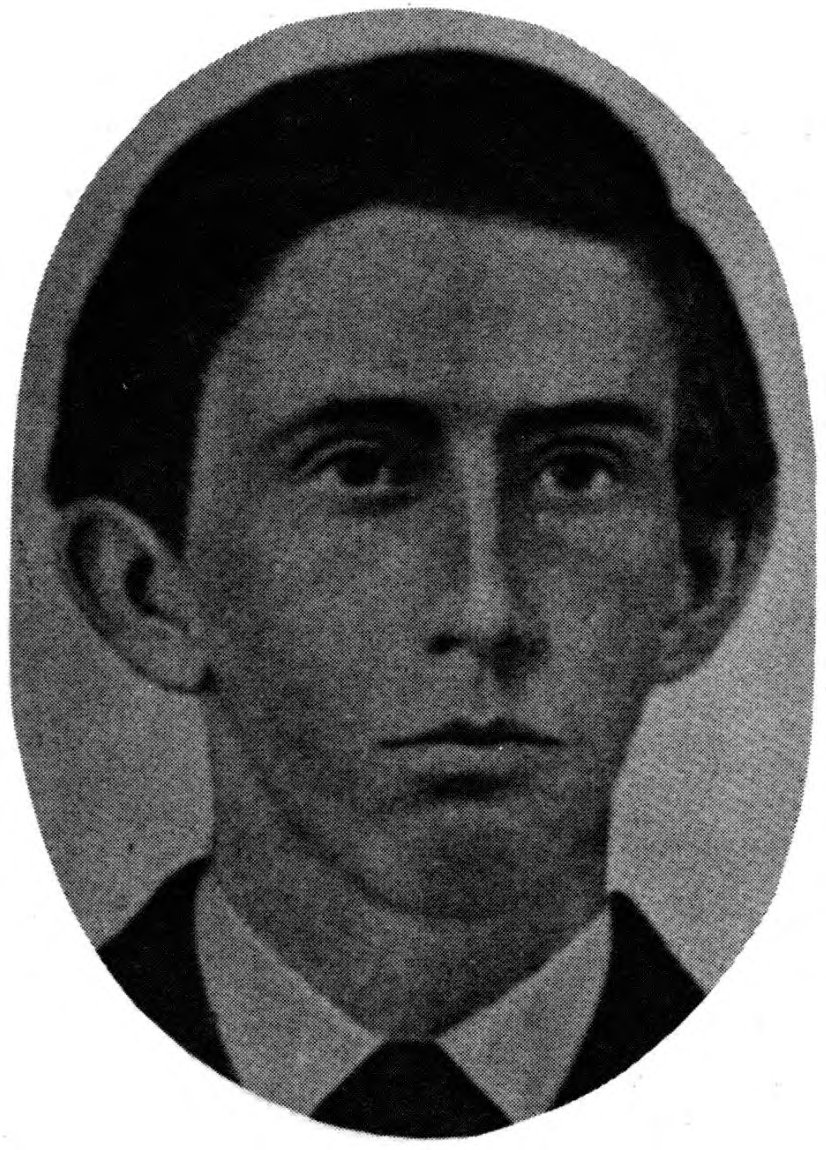 JOHN W. KEITH—Pioneer Beaumont lumberman John W. Keith joined the Confederate army at Sabine at age 16. He was a partner in Long and Company when he died at Beaumont in 1889.
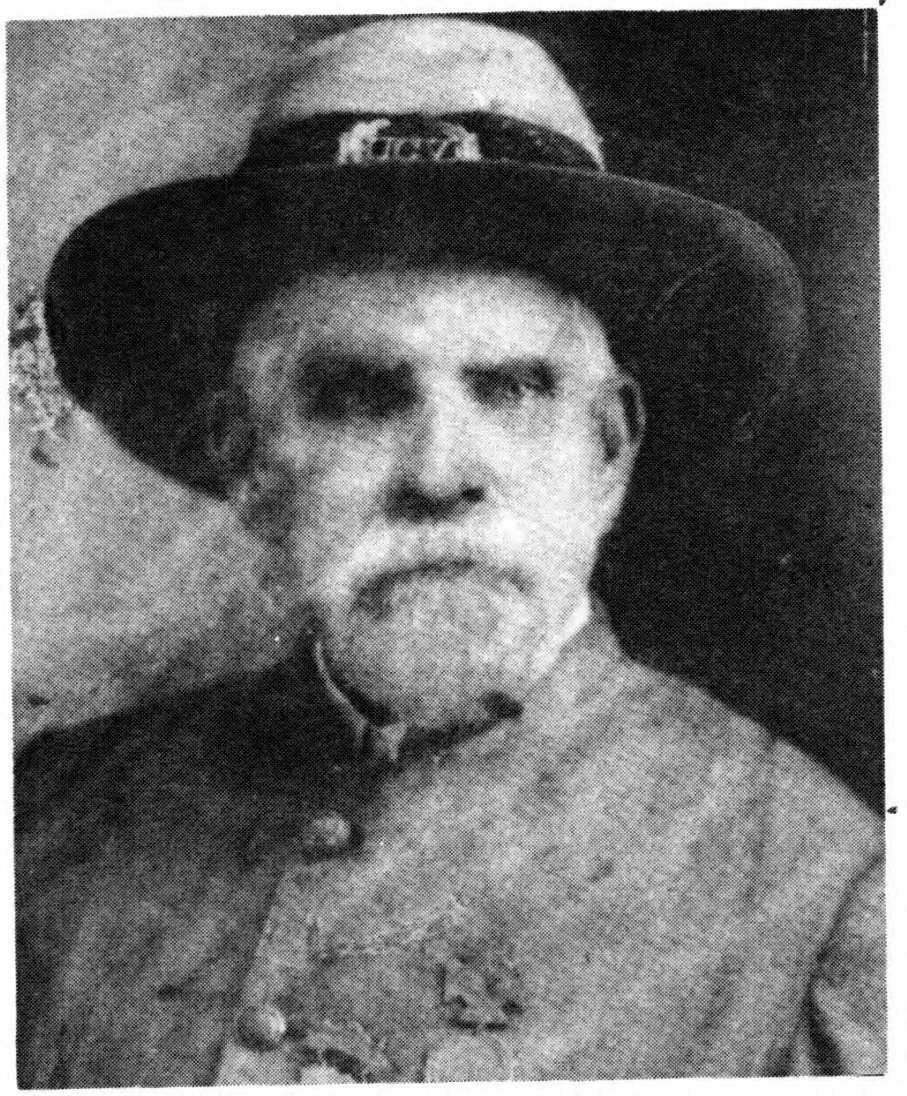 JOSEPH A. BRICKHOUSE—A Confederate artilleryman at Fort Manhassett, Sabine Pass, during 1864, Brickhouse fought at the Battle of Calcasieu and later settled at Beaumont. His memoirs of that battle survive.
Endnotes
1 Beaumont Journal, November 5, 1905; John H. Brown, Indian Wars and Pioneers of Texas (Austin: L E Daniel, 189?), pp. 530-531.
2 Mary M. Osburn (ed.), “The Atascosita Census of 1826,” Texana, I (Fall, 1963), pp. 7-23. The writer believes that some French Acadians lived in the Atascosita District, but had anglicized their surnames.
3 Gifford White (ed.), The 1840 Census of The Republic of Texas (Austin: Pemberton Press, 1966), pp. 94-96. This volume contains the Texas tax rolls of 1839 rather than an actual census enumeration.
4 H. Bailey Carroll, “Texas Collection-State Census of 1847,” Southwestern Historical Quarterly, L (July, 1946), p. 117.
5 Manuscript Returns of Jefferson County, Schedules I-VI, Seventh and Eighth Censuses of the United States, 1850, 1860. Census returns are no better or worse than the effort put forth by the enumerators. Worthy Patridge, who conducted the 1850 census, was also the county’s tax assessor, whereas the enumerator of 1860 was Marshal George Pattillo. With minor exceptions, both performed their assignments with vigor and efficiency.
6 See also “Analysis of The 1850 Census,” Texas Gulf Historical and Biographical Record, VII (May, 1972), pp. 65-67.
7 (Galveston) Weekly News, November 16, 1858.
8 “ Analysis of The 1850 Census,” Texas Gulf Historical and Biographical Record, VII (May, 1972), pp. 66, 115, res.
9 Manuscript Returns of Jefferson County, Schedule I, Population, Seventh Census of the United States, 1850, residences 7, 19, 109, 119, 186, 194, and Schedule IV, Products of Agriculture, pp. 447-452, columns 13.
10 Ibid., Schedule II, Slaves. During the two-year period of 1854-1855 slaves on the county’s tax rolls were assessed at an average value of $472-$474 each. See The Texas Almanac For 1857 (reprint; Dallas: A. H. Belo Corporation, 1966), p. 54; Jacob DeCordova, Texas: Her Resources and Her Public Men (reprint; Waco: Texian Press, 1969), p. 310.
11 Inventory, Estate of C. Hillebrandt, June 2, 1859, and Petition No. 323, Levi Hillebrandt Versus Espar Hillebrandt, July 3, 1859, Jefferson County District Court.
12 Manuscript Returns of Jefferson County, Schedule I, Population, 1860, residences 249, 282, 286, 309, 312, 322, 340, 366, 411, 413.
13 The count of laborers for 1860 was principally railroad construction workmen.
14 Manuscript Returns of Jefferson County, Schedules I, Population 1850, 1860, columns of occupations.
15 Analysis of The 1850 Census,” Texas Gulf Historical and Biographical Record, pp. 68, 70.
16 Vie Texas Almanac for 1857 (reprint; Dallas: 1966), p. 60.
17 DeCordova, Texas: Her Resources and Her Public Men, p. 310.
18 Texas Almanac, 1860 (Galveston: Richardson and Company, 1861), p. 205.
19 Texas Almanac, 1862 (Galveston: Richardson and Company, 1863), p. 32.
20 Texas Almanac, 1863, p. 44.
21 Texas Almanac, 1864, p. 47.
22 Manuscript Returns of Jefferson County, Schedule II, Slaves, 1860, and Schedule IV, Products of Agriculture, pp. 5-6, No. 17.
23 “ Analysis of The 1850 Census,” Texas Gulf Historical and Biographical Record, p. 67.
24 Ibid.; Manuscript Returns of Jefferson County, Schedule II, Slaves, and IV, Products of Agriculture, 1850, 1860.
25 Texas Almanac, 1862, p. 32.
26 Manuscript Returns of Jefferson County, Schedule II, Slaves, 1850; Andrew F. Muir, “The Free Negro in Jefferson and Orange Counties, Texas,” Journal of Negro History, XXXV (April, 1950), p. 195.
27 White, 1840 Census, p. 94; Volume D, pp. 143-144, 462-465, Deed Records, Jefferson County, Texas.
28 Frederick L. Olmsted, Journey Through Texas: A Saddle-Trip on The Southern Frontier (reprint; Austin: Von Boeckman-Jones Press, 1962), p. 243.
29 “ Analysis of The 1850 Census,” Texas Gulf Historical and Biographical Record, pp. 76, 96, 100-101, 105, 109.
30 Manuscript Returns of Orange County, Texas, Schedule I, Population, 1860, pp. 21-22, residences 144-145.
31 Olmsted, Journey Through Texas, p. 244.
32 (Galveston) Weekly News, July 15, 1856. An Ashworth enemy wrote that “old Billy Smith [a representative in the state legislature] had better watch out, for having stated on oath, when called upon by the court, that he considered the said Sam Ashworth to be of mixed blood or, a mulatto . . .” See (Galveston) Tri-Weekly News, July 15, 1856.
33 Beaumont Journal, January 26, 1910.
34 Minutes, Board of Land Commissioners, pp. 94-96, 120, Nos. 109-111, 147, Jefferson County, Texas.
35 "Florence Stratton, The Story of Beaumont (Houston: Hercules Printing Company, 1925), p. 97.
36 Muir, “Free Negro in Jefferson and Orange Counties,” Journal of Negro History, p. 186. All of the Ashworths had formerly resided in and some were born in present-day Calcasieu Parish, Louisiana, where an extensive population and a segregated community of free mulattoes resided in 1850-1860. See Manuscript Returns of Calcasieu Parish, Schedules I, Population, 1850, 1860, Seventh and Eighth Censuses of the United States.
37 White, 1840 Census of Texas, pp. 94, 97.
38 H. P. N. Gammel (compiler), The Laws of Texas, 1822 1897 (10 volumes; Austin: Gammel Book Company, 1898), II, pp. 325-327.
39 Letter, Pattillo to Lamar, Pattillo’s Post Office, February 24, 1840, in Charles A. Gulick and Katherine Elliott (eds.), The Papers of Mirabeau Buonarparte Lamar (6 volumes; Austin: Von Boeckman-Jones Press, 1973), III, p. 340.
40 Muir, “The Free Negro,” Journal of Negro History, p.
41 Gammel, Laws of Texas, II, pp. 549-550.
42 Volume A, p. 23, Minute Book, District Court, and Book A, No. 81, Marriage Record, Jefferson County, Texas.
43 “ Analysis of The 1850 Census,” Texas Gulf Historical and Biographical Record residences 3, 107, 121, 126, 145; Virginia C. Moorer, “The .Free Negro in Texas, 1845-1860” (M. A. Thesis, Lamar State College of Technology, 1969), pp. 9-10, 19-23. There is no record of charges in the county’s Criminal Docket Books.
44 “ Analysis of The 1850 Census,” Texas Gulf Historical and Biographical Record, p. 109, res. 166; Volume A, pp. 76, 130, Minute Book, District Court, Jefferson County, Texas.
45 Manuscript Returns of Jefferson County, Texas, Schedule I, Population, Seventh Census of the United States, 1850.
46 Ibid., Schedule IV, Products of Agriculture; “Analysis of The 1850 Census,” Texas Gulf Historical and Biographical Record, pp. 66, 68.
47 Olmsted, Journey Through Texas, p. 244.
48 Manuscript Returns of Orange County, Schedule I, Population, 1860, pp. 21, 27, residences 144, 186; Schedule II, Slaves; and Schedule IV, Products of Agriculture.
49 Manuscript Returns of Calcasieu Parish, Louisiana, Schedule I, Population, 1850, 1860. While the writer did not try to establish the exact proportion, Anglo surnames appear to outnumber the French names by a ratio of two or three to one.
50 Minutes, Board of Land Commissioners, pp. 117, 173-175, Jefferson County, Texas.
51 “Analysis of The 1850 Census,” Texas Gulf Historical and Biographical Record, pp. 66-68.
52 Manuscript Returns of Jefferson County, Schedule I, Population, 1860, residences 429, 439-446, 451-458, 464-470, 482-487, 497. One writer credits many Anglo surnames as being French Acadians as well. See Mary M. Withers, “The Acadians of Jefferson County, Texas Gulf Historical and Biographical Record, VII (November, 1971), pp. 43-44.
53 “ Analysis of The 1850 Census,” Texas Gulf Historical and Biographical Record, p. 68.
54 Manuscript Returns of Jefferson County, Schedule IV, Products of Agriculture, 1860, pp. 5-6.
55 Minutes, Board of Land Commissioners, p. 205; Volume A, p. 171, Minute Book, District Court; and Volume Q, p. 251, Deed Records, Jefferson County, Texas.
56 Manuscript Returns of Jefferson County, Schedule I, Population, 1850; “Analysis of The 1850 Census,” Texas Gulf Historical and Biographical Record, residences 234, 253, 255, 257.
57 Manuscript Returns of Jefferson County, Schedule I, Population, 1860.
58 (Galveston) Weekly News, November 1, 1859.
59 Volume Q, p. 251, Deed Records, Jefferson County, Texas.
60 Ibid., Volume L, p. 589, and I, p. 61; Manuscript Returns of Jefferson County, Schedule I, Population, 1860, residences 389-399.
61 Volume B, pp. 209-213, Commissioners* Court Minutes, Jefferson County, Texas; Manuscript Returns of Jefferson County, Schedule I, Population, 1860, p. 63; L. East, History and Progress of Jefferson County (Dallas: Royal Publishing Company, 1961), p. 49. Block left Beaumont and settled at Grigsby’s Bluff in 1854.
62 Manuscript Returns of Jefferson County, Schedules I, Population, 1850, residences 192-194; and 1860, residences 335-357.
63 The census mortality Schedules III for 1850 and 1860, about fifty columns of Beaumont correspondent Henry R. Green, and a diligent search of the Galveston Weekly News, Tri-Weekly News, and Houston Telegraph and Texas Register have not revealed the presence of yellow fever in Jefferson County prior to 1862.
64 Manuscript Returns of Jefferson County, Schedules III, Mortality, 1850, 1860. The writer knows of one woman, Mrs. Mary Ann Hillebrandt of Grigsby’s Bluff, who died in childbirth in 1860, and whose tombstone verifies the year. However, her name was omitted from the schedule.
65 “Analysis of The 1850 Census,” Texas Gulf Historical and Biographical Record, residences 27,194, 197, 255.
66 Beaumont Journal, November 25, 1906.
67 (Galveston) Weekly News, November 16, 1858; K. D. Keith, “The Memoirs of Captain K. D. Keith,” unpublished manuscript, 1896, p. 14.
68 (Galveston) Weekly News, November 16, 1858. By “prevalent elsewhere,” Green meant that three hundred persons died of yellow fever at Galveston during the fall of 1858.